
Katy Crowe and Ron Linden – Praxis 2.0
OPENING RECEPTION FOR THE ARTISTS: January 9, 4:00-7:00 PM. Dates and times subject to change. Please sign our guest list to receive the latest updates about this exhibition.
Ron Linden and Katy Crowe share a friendship rooted in art, mutual respect, and the creative community of downtown Los Angeles. Both are accomplished abstract painters whose work reflects a commitment to experimentation, discipline, and the possibilities of paint. Their exhibition, Praxis 2.0, brings together two distinct artistic sensibilities connected by a common dedication to the act of painting.
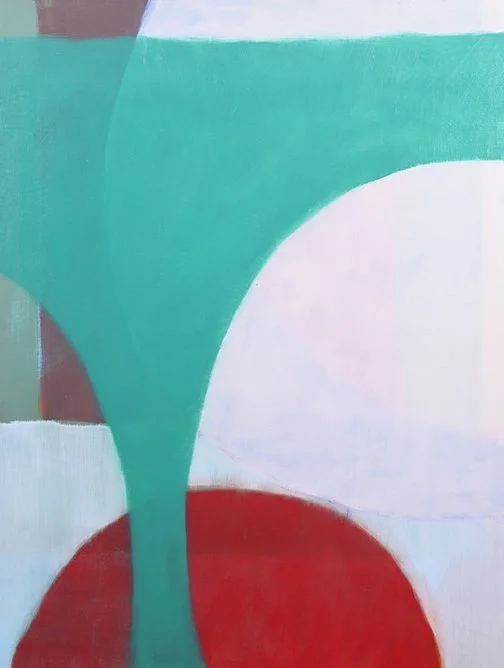
Delphic (1) – Katy Crowe
Their story intersects with that of Al’s Bar, the legendary downtown gathering place where artists, musicians, writers, and performers helped shape an emerging Los Angeles cultural identity. During the 1980s and early 1990s, downtown was still a relatively inexpensive and largely overlooked part of the city. Its industrial spaces and aging commercial buildings offered artists opportunities to live, work, exhibit, and build a community outside the established gallery system.
Linden and Crowe were active participants in that community, helping establish and operate artist-run galleries associated with Al’s Bar. Their friendship grew from this environment of creative independence and mutual support, and they have continued to exhibit together while pursuing their individual artistic directions.
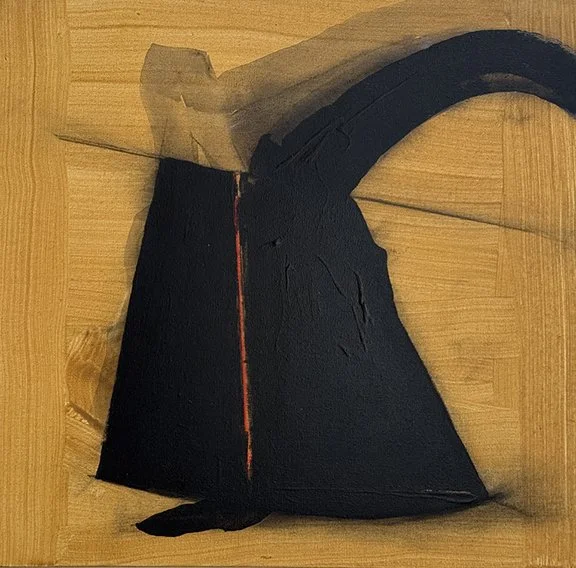
#4 – Ron Linden
Linden’s work reflects a sustained investigation of painting’s fundamental elements: surface, structure, material, and gesture. His early interest in architecture informs compositions that often suggest constructed spaces or fragments of recognizable forms without resolving into literal representation.
His paintings employ a deliberately restrained vocabulary of blacks, grays, oxides, and earthy neutrals. Surfaces are often rough, layered, and physically assertive, revealing evidence of the decisions and revisions involved in their making. Shapes and marks suggest structures or forms that seem almost recognizable but resist easy identification. Literature and poetry have long informed his thinking, yet his paintings do not illustrate particular stories or ideas. Instead, they invite viewers to consider the relationships between what is visible, what is suggested, and what remains unresolved.
Crowe approaches abstraction through a different set of concerns. Her work is distinguished by its sensitivity to light, shadow, color, and the natural environment. Where Linden’s paintings often emphasize the physical presence of materials, Crowe’s compositions explore the more elusive qualities of perception and atmosphere.
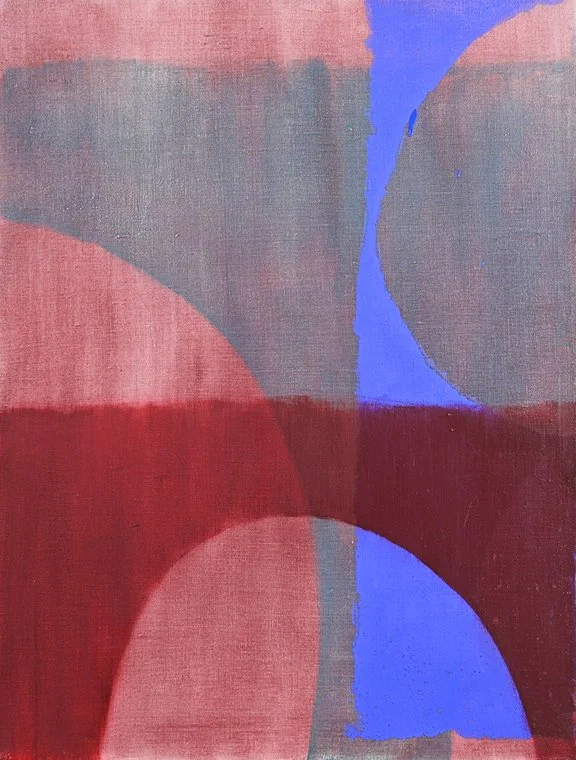
Moon Phase #7 – Katy Crowe
Working primarily in oil and watercolor, Crowe investigates the ways familiar forms can be transformed through observation and abstraction. Her paintings often begin with self-imposed systems inspired by nature or architecture. Within these structures, shifts in color, light, and spatial relationships create compositions that are both carefully considered and open to unexpected discoveries. Rather than describing a particular landscape or object, her work captures something of the experience of seeing it.
Despite their differences, both artists share a reductive sensibility. Each works toward an image in which unnecessary elements have been removed, leaving compositions that may appear deceptively simple. Yet beneath that simplicity lies a complex process of observation, experimentation, revision, and judgment.
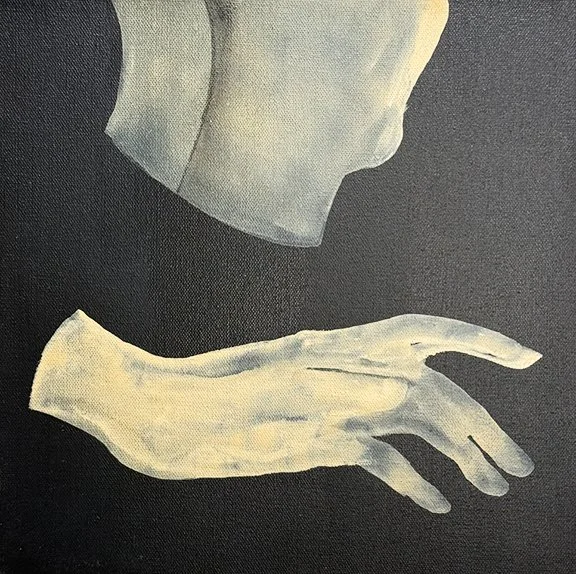
#3 - Ron Linden
The exhibition’s title, Praxis 2.0, acknowledges an earlier two-person exhibition titled Praxis, a Latin word meaning practice or action. This second exhibition continues their exploration of painting as an activity requiring both intellectual engagement and physical skill. For Linden and Crowe, praxis refers not to an artistic career or professional identity, but to the ongoing work of making art.
Praxis 2.0 celebrates two artists whose individual approaches to abstraction reveal both the discipline and the freedom inherent in painting. Their work demonstrates that the process of making art continues to offer opportunities for discovery, regardless of how familiar the materials or methods may become.